THE RELATIONSHIP BETWEEN THE TYPE OF CHARACTER ACCENTUATION IN ADOLESCENCE AND THE STYLE OF FAMILY EDUCATION
Журнал: Научный журнал «Студенческий форум» выпуск №38(347)
Рубрика: Психология


Научный журнал «Студенческий форум» выпуск №38(347)
THE RELATIONSHIP BETWEEN THE TYPE OF CHARACTER ACCENTUATION IN ADOLESCENCE AND THE STYLE OF FAMILY EDUCATION
Abstract. The article describes an empirical study of character accentuations in adolescents and analyzes the results of the study. It has been established that the style of family education contributes to the formation of character accentuations in adolescence, which influence the socialization and development of the adolescent's personality. Under the influence of hyperprotection, accentuations of demonstrative and anxious character types develop. Dominant hyperprotection influences the development of demonstrative accentuation and anxiety. Hypoprotection also stimulates the development of demonstrativeness, and increased moral responsibility with high demands on the adolescent and minimal care stimulates the development of features of the anxious type of accentuation and pedantry.
Keywords: accentuation, adolescence, family education, psychology.
In adolescence, character traits become more pronounced. The desire for independence, the awareness of one's physical and spiritual development, is one of the most striking features of this age. And if parents manage to restructure their relationships with their growing children and change their parenting style, this, in turn, will also affect the child's character.
Accentuation implies an increase in the degree of expression of a certain trait. This personality trait thus becomes accentuated. Accentuated traits are far less numerous than varying individual ones. K. Leongard believed that accentuation is, in essence, the same individual traits, but with a tendency to transition into a pathological state [2]. When more pronounced, they leave an imprint on the personality as such and, finally, can acquire a pathological character, destroying the structure of the personality.
The psychological study of character accentuations in Russian psychology has been covered in the works of S.L. Rubinstein, K.N. Kornilov, B.M. Teplov, V.N. Myasishchev, A.G. Kovalev, B.G. Ananiev, and others.
Issues of family education are considered in the research of A.Y. Varga, T.V. Arkhireeva, N.N. Avdeeva, A.I. Zakharov, A.I. Spivakovskaya, A.E. Lichko, E.G. Eidemiller, and others.
The aim of the research was to identify the direction of the relationship between character accentuations in adolescence and the style of family education. We hypothesized that there is a relationship between the style of family education and character accentuations in adolescence. Hyperprotection correlates with accentuations of the demonstrative and anxious character types, dominant hyperprotection correlates with demonstrative accentuation and anxiety, and hypoprotection correlates with demonstrativeness.
We used the following methods: comparative, testing, methods of quantitative and qualitative analysis. To diagnose character accentuations in adolescents, we used the following techniques: Modified questionnaire for identifying types of character accentuations in adolescents (A.E. Lichko) and the "Parent-Child Interaction" questionnaire by I.M. Markovskaya, which contains two parallel forms: for parents and for children. Mathematical processing was performed using Pearson's parametric correlation method.
The results of the study on the severity of family education style indicators are presented in Fig. 1.
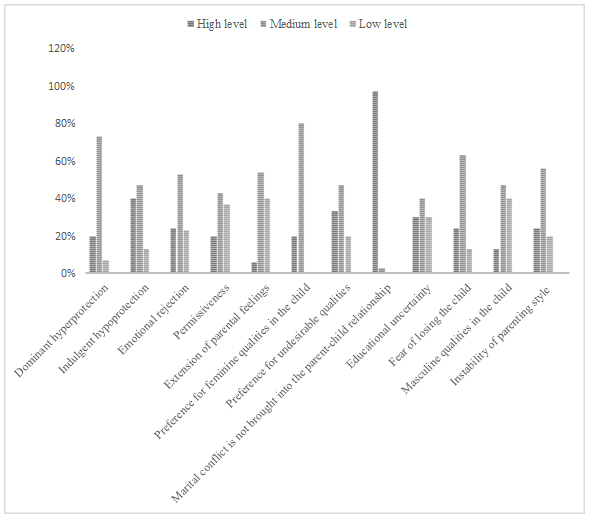
Figure 1. Severity of Family Education Style Indicators, % (Parents)
Considering the results on family education styles, it can be noted that on the "Dominant Hyperprotection" indicator, 20% of mothers showed a high level, 73% an average level of dominance, and 7% a low level.
On the "Indulgent Hypoprotection" indicator, 40% have a high degree of severity of this parenting style, 47% medium, and 13% low.
Emotional rejection towards the child is pronounced in 24% of mothers, 53% of mothers use this parenting style moderately.
Permissiveness in raising children is manifested to a significant degree in 20% of mothers, and to a medium degree in 43%.
Extension of parental feelings is present in 6% of mothers, 54% have an average indicator, and 40% have a low one.
24% of mothers predominantly experience a sense of loss regarding the child, 13% of parents are characterized by weakness, underdevelopment of parental feelings.
13% of mothers prefer masculine qualities in adolescents, and 47% of mothers prefer feminine qualities, although the sample of subjects mainly consists of male adolescents.
Instability of parenting style prevails in 24% of mothers.
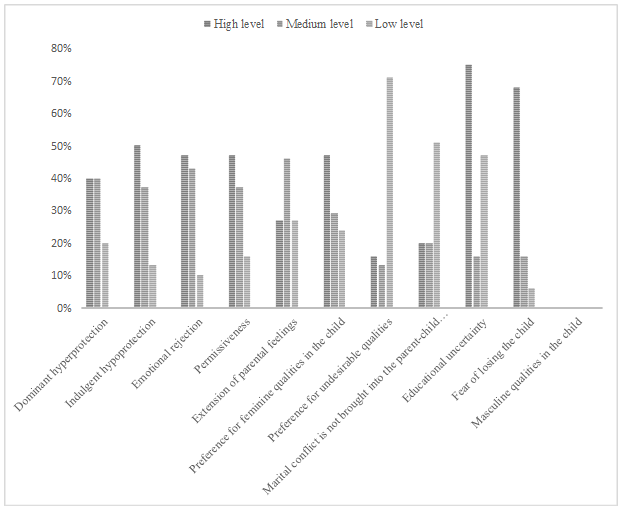
Figure 2. Severity of Family Education Style Indicators, % (Adolescents)
Considering the results of adolescents' perceptions of the family education style on the "Dominant Hyperprotection" indicator, 40% of children assess this type as quite pronounced, 40% of children note maternal dominance to a moderate degree, 20% of children do not identify this type of upbringing in relation to themselves.
The data on the "Indulgent Hyperprotection" indicator are interesting: 50% of children point to a clear severity of this type of upbringing, 37% of children assess it as moderate, 13% of children do not identify this parenting style.
Emotional rejection towards themselves is confirmed by 47% of adolescents, 43% of children feel rejection to a medium degree, 10% of children do not note this style of improper upbringing.
Increased moral responsibility is present to a sufficient degree according to 50% of adolescents, 30% of children consider this type of upbringing insufficiently pronounced, 20% of children do not identify this type of upbringing.
The style of permissiveness, lack of control over themselves is highly noted by 47% of adolescents, to a medium degree by 37% of children, 16% do not identify this type of upbringing.
27% of adolescents point to the style of extension of parental feelings, 27% identify this parenting style to a moderate degree, 46% do not identify this type of upbringing.
37% of children believe that their mother sees childish qualities in them, 24% of children note average indicators, 39% of children do not note hypoprotection in upbringing.
Projection of their own undesirable qualities onto the child is noted to a significant degree by 47% of adolescents, to a medium degree by 29%, 24% of children do not note it.
Some children, 16%, believe that their mothers bring the conflict with their spouse into the sphere of upbringing, 13% of children consider it moderate, 71% of children indicate the absence of this type of upbringing.
Educational uncertainty, according to adolescents' perceptions, is inherent in 20% of mothers, average severity in 20% of mothers, 51% of adolescents believe that educational uncertainty is not characteristic of their mothers.
Fear of loss, according to adolescents, manifests in 75% of mothers, in 16% to a medium degree, 47% of adolescents do not note this parenting style.
The style of extension of parental feelings is identified by adolescents only in 3% of mothers, while 84% of adolescents do not identify this style.
In contrast to the previous characteristic, 68% of adolescents point to clear instability of upbringing, 16% to average, 6% to low.
Analyzing family education styles and the child's perception of them, the following conclusions can be drawn:
- Upbringing by the "family idol" type most often occurs when both the mother and the child's perception show hyperprotection (82% and 62%). Parents strive to free the child from all difficulties, comply with his desires, excessively love and patronize him;
- Dominant hyperprotection, excessive protection (in 74% and 66% of cases) is the main feature of upbringing disturbance, which manifests itself in constant control and absurd protection, turning into constant prohibitions and continuous monitoring of the child. Relentless denial of the ability to make one's own decisions;
- Indicators of increased moral responsibility are higher in mothers (71%), while in adolescents they are slightly lower (57%). Adolescents are required to be honest, decent, and have a sense of duty, even inappropriate for their age. While their interests and capabilities are ignored, they are burdened with responsibility for the well-being of their loved ones;
- Disturbance by the type of emotional rejection is clearly represented in mothers (67%) and lower from the adolescent's side (43%); the child's perception of being rejected by the mother helps reduce psychological trauma. Often the child suffers from emotional deficiency and the unwillingness to satisfy his needs. The child is often left unattended;
- In 61% of cases, mothers show a pronounced indicator of "hypoprotection," while for the child this indicator is only 48%. This scale indicates a lack of guardianship, control, and genuine interest from parents in their adolescent.
Comparing the indicators of family education style disturbances and the child's perception of them, it is important to note the positive point that the child perceives the mother's upbringing disturbances as less pronounced. This reduces the adverse impact of these disturbances on the child's psyche, reduces the likelihood of adolescent behavioral disturbances and trauma. Furthermore, it reduces the chances of character accentuations manifesting. Therefore, when comparing indicators of family education style disturbances and the child's perception of them, this aspect is significant.
The results of the study of adolescents' character accentuations are presented in Fig. 3.
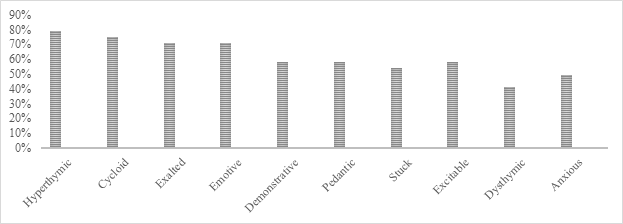
Figure 3. Distribution of Adolescents by Severity of Character Accentuations (%)
The identification of character accentuations in adolescents during our research made it possible to distinguish various types of accentuations, with a significant representation of pronounced accentuations of the hyperthymic, cyclothymic, exalted, and emotive types among this group of adolescents:
- Adolescents with the hyperthymic type (79%) stand out for their cheerfulness, superficiality, businesslike attitude, talkativeness, tendency to joke, inventiveness, and tendency to gluttony. They are excellent conversationalists, able to entertain others, their character is frivolous and optimistic;
- Alternating states of hyperthymia and dysthymia characterize the cyclothymic type (75%). In adolescents of this type, joyful events cause a desire to act, increased talkativeness, and a surge of ideas, while sad events lead to depression, slowed reactions;
- The exalted type, characterized by special emotionality (in 71% of cases), demonstrates the ability to experience delight, admiration, to smile, to feel happiness, joy, and pleasure, to show impulsiveness, mood variability, passion, the opposition of feelings (love and hate, delight and despair), as well as high social activity;
- The emotive type (71%) is characterized by sensitivity, anxiety, deep reactions to subtle feelings, humanity, responsiveness, soft-heartedness, and impressionability.
Character accentuations are extreme variants of the norm, where individual character traits are excessively enhanced, leading to selective vulnerability to certain psychogenic influences, despite good or even increased resistance to others. To put it differently, accentuations are a variant of mental health (norm), where some character traits are particularly pronounced, sharpened, and inconsistent with the rest of the personality, leading to a certain disharmony.
The study of the relationship between the style of family education and character accentuations in adolescence is presented in Table 1.
Table 1.
Study of the Relationship between Character Accentuations and Family Education Style
|
Character Accentuations / Education Types |
Indulgent Hyperprotection |
Dominant Hypoprotection |
Emotional Rejection |
Increased Moral Responsibility |
Hypopr-otection |
|
Demonstrativeness |
0,8565 |
0,658 |
0,5576 |
0,2957 |
0,747 |
|
Stuckness* |
-0,1429 |
-0,3073 |
-0,2666 |
-0,3085 |
-0,1742 |
|
Pedantry |
-4,996 |
0,1187 |
0,0048 |
0,3915 |
-0,121 |
|
Excitability |
0,0092 |
0,2028 |
0,08115 |
0,1382 |
0,0673 |
|
Hyperthymia |
0,06896 |
0,0293 |
0,0917 |
-0,1257 |
0,2053 |
|
Dysthymia |
-0,3743 |
-0,1631 |
0,0882 |
0,0161 |
-0,189 |
|
Anxiety |
0,3867 |
0,6371 |
0,3792 |
0,7685 |
0,2929 |
|
Exaltation |
-0,1441 |
-0,1631 |
0,0582 |
-0,3009 |
-0,1971 |
|
Emotivity |
-0,1871 |
0,1333 |
-0,1742 |
-0,2549 |
-0,1954 |
|
Cyclothymia* |
-0,3475 |
-0,1134 |
0,0872 |
0,0747 |
0,2774 |
Analyzing the data in the table, it is worth noting the resulting correlations:
- If emotional rejection is high, then accentuation of the stuck type is low and vice versa (r = -0.4249);
- Cyclothymia develops when there is increased emotional rejection (r = 0.3616);
- Hyperthymia correlates with pedantry, but here the lower one indicator, the higher the other (r = -0.4185);
- Anxiety has a statistically significant relationship with pedantry; here, the higher the pedantry, the higher the anxiety (r = 0.3794);
- Dysthymia correlates with exaltation; the higher one indicator, the higher the exaltation (r = 0.4039);
- Exaltation correlates with cyclothymia; the higher one indicator, the higher the other (r = 0.5772).
Analysis of the obtained data confirms the research hypothesis that the style of family education contributes to the formation of character accentuations in adolescence, which influence the socialization and development of the adolescent's personality. The higher the indicators of disturbances in parenting styles, the more pronounced the character accentuations.
Thus, the results of our research and statistical data processing allowed us to confirm that the style of family education correlates with the character accentuations of adolescents. In order to avoid deviations in children's behavior, parents, teachers, and psychologists should pay attention in time to the characteristics of the child's character and the style of family education. Knowing the type of the child's character accentuation and, if possible, avoiding unfavorable socio-psychological influences, the formation of deviant behavior can be prevented. Character accentuations are extreme variants of the norm, where individual character traits are excessively enhanced, leading to selective vulnerability to certain psychogenic influences, despite good or even increased resistance to others.
