COMMUNICATIVE MISSION OF THE DOCUMENTARY FILMMAKING AT THE XXI-ST INTERNATIONAL FILM FESTIVAL “WON TOGETHER” NAMED AFTER VLADIMIR MENSHOV
Конференция: CIX Международная научно-практическая конференция «Научный форум: филология, искусствоведение и культурология»
Секция: Кино, теле и другие экранные искусства

CIX Международная научно-практическая конференция «Научный форум: филология, искусствоведение и культурология»
COMMUNICATIVE MISSION OF THE DOCUMENTARY FILMMAKING AT THE XXI-ST INTERNATIONAL FILM FESTIVAL “WON TOGETHER” NAMED AFTER VLADIMIR MENSHOV
КОММУНИКАТИВНАЯ МИССИЯ ДОКУМЕНТАЛИСТИКИ XXI КИНОФЕСТИВАЛЯ «ПОБЕДИЛИ ВМЕСТЕ» ИМЕНИ ВЛАДИМИРА МЕНЬШОВА
Лебедева Надежда Анатольевна
д-р филос. в области культурологии, проф., Евразийская Академия Телевидения и Радио, главный редактор Международного научного журнала «Universum: филология и искусствоведение», почетный член Международной организации академического и научного развития (Индия), г. Москва, Российская Федерация
Abstract. The main aim of this article is to highlight the communicative mission of the documentary program screening of the International Film Festival “Won Together” named after Vladimir Menshov.
Аннотация. Целью данной статьи стало освещение коммуникативной миссии документалистики, представленной в рамках программного показа кинофестиваля «Победили вместе» имени Владимира Меньшова.
Keywords: Film Festival “Won Together”; culture; cinema; values, communication.
Ключевые слова: кинофестиваль «Победили вместе»; культура; киноискусство; ценности, коммуникация.
The XXI-st International Film Festival “Won Together” named after Vladimir Menshov took place in September 2026 in two stages: from the 14-th of September to the 19-th in Moscow and from the 20-th of September to the 24-th in Sochi. This festival was organized by the Eurasian Academy of Television and Radio, the World Peoples Assembly, the Sochi City Administration, the “Integration” production center, and the “Intellectual Resource” company, with the support of Ministry of Culture of the Russian Federation [1].
A significant number of scholarly works have been dedicated to the communicative function of art and culture and their noble missions [2; 7; 8; 15]. According to Tatyana Melnichenko, the importance of the communicative function of art lies in the fact that it enables “the establishment of contacts between individual people, as well as between nations and generations. Art not only creates information but also serves as the most effective means of transmitting it, facilitating social contact and social interaction” [8, p. 182].
The main aim of this article is to highlight the communicative mission of the documentary program screening of the International Film Festival “Won Together” named after Vladimir Menshov.
In Aida Soboleva’s article “The Documentary Filmmaker Stands at the Intersection of Reality, Memory, and the Future” [14], not only is the festival-winning film “Catastrophe” (Iran) by Saeed Nabi, created jointly with the screenwriter and his wife Maryam Khadivi, superbly presented, but also a wonderful first-hand interview with the film’s author is provided.
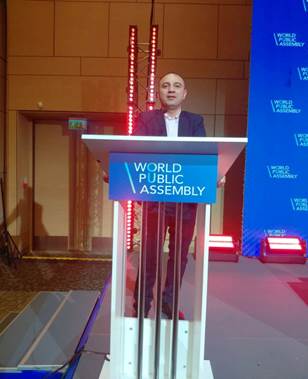
Figure 1. Iranian director and producer Saeed Nabi, author of 25 films on environmental topics, who worked as a media consultant for the Ministry of Agriculture of the Islamic Republic of Iran, the winner of 50 international awards in the field of documentary filmmaking and laureate of the National Prize of Iran for the Protection of the Environment [14]
“This film tells the story of the environmental disaster facing the residents of Sarahiye village, near the city of Shadegan in the southwest of the country. Situated in a vast wetland, this area was once known as the “Iranian Venice”. It was once home to many species of fish, but now only tilapia remains, which thrives in polluted water and is therefore unsafe to eat. The problems were caused by a sugarcane processing plant built several years ago, whose waste altered the chemical composition of the water in the Jerrahi River floodplain. This environmental disruption has triggered a chain of disasters: migratory birds have become fewer in the marshes, the pastures where domesticated buffalo once fed have become depleted, and the palm grove where dates grew is withering. People are losing their source of income and leaving their homes. Life is becoming increasingly poor and uncertain, and officials are inactive” [14].
At screenings at the House of Russian Abroad in Moscow and at the Sochi branch of Peoples' Friendship University, the director explained that after the film's release, which was attended by representatives of local and national Iranian authorities, the problem of water pollution in these areas was resolved, and people's lives began to improve” [14].
A renowned Russian journalist Aida Soboleva masterfully revealed a cinematic approach to solving global problems in the context of mutual understanding between representatives of different countries in the name of creation and peace on our planet.
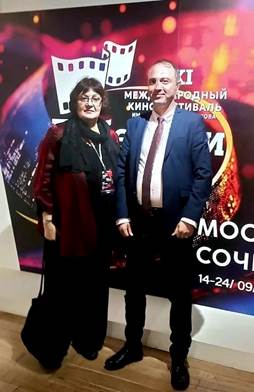
Figure 2. Well-known Russian journalist, correspondent for the magazine “International Affairs”, jury member of the film festival “Won Together” Aida Soboleva and Saeed Nabi
The human use of natural resources has also found an extension in the work of Chinese documentary filmmakers. The film “A New Chapter in the Snow History of Heilongjiang” (2026), produced by Heilongjiang Broadcasting Station, Harbin.
Magnificent mountain snow-covered landscapes of Northeast China unfold before the viewer; here, winter is a long season. Ten years ago, Xi Jinping articulated the idea that “green mountains and emerald waters are priceless treasures” — a concept that expanded to include the notion that “ice and snow are also untold treasures”, thereby becoming an official guiding principle for development. Heilongjiang’s once-dormant “cold resources” have transformed into thriving “hot industries” — a shift presented to the viewer in a vivid, colorful, and engaging manner. The province is actively implementing a rural revitalization plan, where vast expanses of snow and ice provide a grand stage for rural renewal and offer boundless prospects for winter tourism. A blanket of snow stretches for thousands of li across the province’s villages and hamlets, which boast unique scenery and distinctive natural beauty.
The filmmakers showcase life in four specific locations: Xuexiang Village, Qinggan Township, Beiji Village, and Tiegula Village (part of Linjiang Village in Nenjiang City, under the jurisdiction of Heihe City). Xuexiang Village exemplifies the transition from a forestry-based income to an ice-and-snow economy; notably, it attracted 185,000 tourists in 2026.
Beiji Village is known as the “City of Fur”, a place where temperatures can plummet to minus 53 degrees Celsius. The film highlights well-equipped guesthouses and a variety of exciting activities for tourists amidst the northern snows. The beauty of the aurora offers a unique spectacle for visitors from around the globe.
The residents of Tiegula village have demonstrated a path to prosperity through hard work and bold experimentation. Automakers from various countries come here to conduct trials and test the reliability of their vehicles; the ice test tracks created by the villagers are truly impressive.
The town of Qing'an, located in Qing'an County (under the jurisdiction of Suihua City), hosted snow football competitions. The ski resort established there enjoys immense popularity.
The film’s central message highlights a unique example of human unity. People stand together in harsh conditions, demonstrating the strength found in solidarity, which leads to communal prosperity.
The idea is masterfully embodied by the film's director, Yao Dongmei — film director, producer, and head of the documentary department of Heilongjiang Broadcast and Television Station, Harbin; director and producer of documentaries has been repeatedly awarded state-level and International prizes, including Film Festival “Won Together”, and the film’s producer is Yan Zhiyong.
Lyudmila Bakeeva — Vice President of the Eurasian Academy of Television and Radio, and an Academician of the International Academy of Management —highly praised the cinematography of Chinese colleagues, noting the challenging climatic conditions in which they worked.
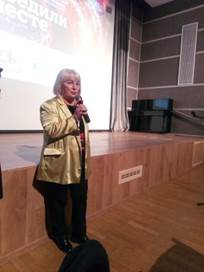
Figure 3. Vice-President of the Eurasian Academy of Television and Radio Lyudmila Bakeeva at premiere screenings of films from China
The next documentary that attracts our attention is “Flower Chasers”. Pan Zhiqi, a documentary filmmaker, professor at Zhejiang University of Communications created this film. This is shot in a road movie genre follows young beekeeper and his family as they travel through China chasing flowers for honey, witnessing the survival of beekeepers in the context of the ecological crisis. In 2023, the film won the award for Best Short Film at the Sheffield Doc Fest (Great Britain) [12]. In his works Pan Zhiqi describes the lives of ordinary people in the context of the modernization process and climate change. He works in collaboration with NHK, KBS, Mediacorp and PTS, and has been repeatedly awarded. Filmography: “24th Street” (2017), “Flower Hunters” (2023), “Aunt Hu's Gardens” (2024).
It should also be noted that, in the context of this study, the theme of historical memory through the prism of culture's communicative mission is vividly expressed in the works of Chinese colleagues. The large-scale historical drama “The Landscape Is Especially Beautiful Here” (China) is a live-action micro-series produced by the Jiangdu Shiji Film and Cultural Company of Zhejiang Province, 2026. Producers: Zi Yang, Lingling Tao. Director: You Xiaogang, screenwriter: Wang Chaozhu, cinematographer: Zhenguo Liu, composers: Hongguang Zhang, Zhaoyang Hu, and leading actors: Shuai Chi, Jingcheng Jin, Weizhi Wang, Bajia Pu, and Jinghan Chen masterfully conveyed the spirit of the era and the historical atmosphere, captivating viewers with their artistic portrayals of folk heroes.
1927 was an extremely dark and bloody year in China's modern history. Chiang Kai-shek led the Northern Expedition with the support of the Communist Party of China. His troops quickly occupied both banks of the Yangtze River and entered Shanghai. However, he unleashed a counterrevolutionary coup and massacred communists on April 4. This was followed by another counterrevolutionary coup in Wuhan on July 15. On August 1, 1927, under the leadership of Zhou Enlai, Le Long, Ye Ting, Zhu De, Liu Bochen, and others, the Nanchang Uprising erupted, shaking China and the world. In a critical moment of crisis that determined the fate and prospects of the party and the revolutionary cause, the Central Committee of the Communist Party of China convened an emergency meeting in Hankou (Hubei Province) on August 7, 1927. At this meeting, the general line of agrarian revolution and armed struggle was approved.
“The 100–episode micro-series is a large-scale historical drama that covers an important period in the history of the Chinese Revolution: from the defeat of the “Great Revolution” in 1927 to the Great March of the Red Army and its arrival in Shaanxi Province in 1935. The focus is on Mao Zedong and Zhou Enlai, who went through the hardest trials during the “harsh years” of the CCP, but it was during these years that they emerged as leaders and determined the country's future path” [12].
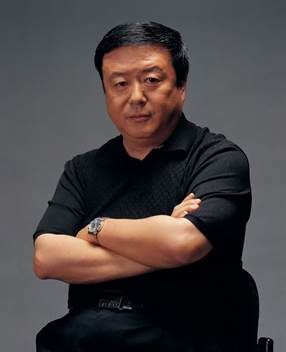
Figure 4. The main director of the film “The Landscape Is Especially Beautiful Here” Xiaogang You, state first-category director, honorary chairman of the Capital Association of Television and Radio Program Producers, first vice-president of the Eurasian Association of Television and Radio Broadcasting, lifelong chairman of the jury of the Macau International Television Festival, lifelong chairman of the jury of the Slavic Culture Film and Television Festival
On the author’s of this article opinion, the film is beautifully crafted: the landscapes are truly beautiful, and filled with rich, vibrant colors, and the color and sound are harmoniously combined. The plot is tense. The acting is talented, conveying to the viewer the complex range of emotions associated with heroic trials. The composition of each frame is meticulously crafted, maintaining symmetry and diversity, underscoring the professionalism of the filmmakers.
The chronicle of the struggle of Soviet volunteer pilots in China against the Japanese invaders is captured in the film “Falcons Piercing the Sky”, produced by the Center for Military Programs China Media Group Military Program Center, Beijing Discovery Documentary Media Co., Ltd, directors: Hu Yu, Li Jingwei, Xu Jiaqing, Sun Tzu, Meng Chunlei. Producers: Hu Yu, Li Jingwei, Li Wei. Screenplay: Hu Yu. “A chronicle of the struggle of Soviet volunteer pilots in China against the Japanese invaders and the first Chinese documentary to systematically recount the history of the Soviet Volunteer Air Force's operations in China during the War of Resistance against Japanese Aggression. The dynamics and plot are masterfully conveyed Hu Yu, a leading director and screenwriter at the China Media Group Military Program Center; an author of many documentaries and TV series about the War of Resistance against Japan” [12]. Thus, the memory of the feat of friendship between two great nations is preserved for the common goal of achieving peace and human well-being.
The documentary — “Macula” (directed by Mariana J. Rivera, Mexico) has been awarded by Special Jury Diploma. Macula is the central part of the retina where vision is formed. It is with the eye that the narrative begins. This film encircles the viewer with music and rhythm of shots, captivating the feeling invested in it by Mariana J. Rivera. This is her story, a personal story that resonates with the soul of every woman. Sonia (the mother of movie's heroine) “gradually loses her sight, but thanks to this, her daughter undertakes a kind of journey to learn about events that have until now been silent and that have eclipsed the original memories of her birth” [12]. Mother of the film's main character says that she cannot cry, it is beyond her strength, and she has never cried. Perhaps that is why one of the main reasons for the author of the film was to turn to her mom, to what she feels — a deep sadness that cannot be explained. These feelings led Marianne to the idea that perhaps during her mother's pregnancy, when her feelings were passed on to the child, something frightening, incredibly sad, has happened.
And so, Marianne begins her search. She and her mother undergo therapy by the sea, which is beautifully and artistically depicted. Every frame is composed with precision and rich color. The underwater footage is astonishing, symbolizing the girl's presence within her mother's body. Mother and daughter engage in frank conversation. Eventually, Marianne uncovers a terrible truth about her past: when our heroine was born, her grandmother died, and her uncle Jaime disappeared (this was 1984). Repression against the main character's family prevented their search for him. This unexplained story is yet another in a series of forced disappearances in Mexico, which also affected Marianne’s father, so the film is also dedicated to him.
Beautifully crafted visuals keep the viewer immersed in their own inner world; the issues touched upon in the film are so profound that everyone can relate to them. Therefore, according to the author of this article, film serves as a means of uniting the best human qualities of people from different countries and continents into a single whole, regardless of linguistic or religious affiliation.
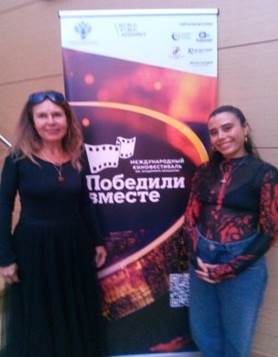
Figure 5. Mariana J. Rivera — director and lead actress in the film “Macula”, and the author of this article — Nadezhda Lebedeva
The film “The Emulsion of Time” (Costa Rica), directed by Pablo Wong, centers on a filmmaker's journey to the Nicaraguan town of Jinotega. He travels there to reconstruct the image of his grandfather, a Chinese photographer who emigrated many years ago. He succeeds. The film's play of color is symbolic: the past is represented by the film developing under a red light in a small room, while the present is represented by picturesque Nicaraguan landscapes, the author's conversations with locals, and the search for a burial site. The film provokes reflection on human destinies and purpose.
Next documentary “The Madman Coach” by Carlo Liberatore (Senegal/Italy) shows how Malick Bitey assembles a football team in Dakar made up of players with mental disabilities. Sport is the only activity that has a positive effect on their biological and psychological well-being. The camera captures the squalid buildings and emaciated people, showing their daily lives: food and old boats. Children playing football inspire a desire to help. We see the destinies and desires of these men fighting for their place in this world. Each of them wants to be loved, happy, simply live, love and raise children, and be healthy. They believe in God, and the camera captures their pure prayers. “Senegal — it's great!” says one of the film's characters. Their journey culminates in Italy, where they fulfill their dream of playing in an international football match.
Elena Kovardakova (Kazakhstan), Deputy Chairperson of the Heritage NGO and film director, is known by her work on the films “Partisans” [9], “Internationalists” [4], “The Road to Victory” [13], “General Panfilov” [3], “The Last Frontier” [10], “Television Encyclopedia” [11] and other film projects. During the discussion, she highly valued the film's author's moral and rich message, the amazing insight and kindness with which this documentary film was created.
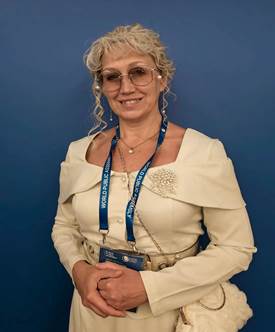
Figure 6. Elena Kovardakova (Kazakhstan) — Deputy Chairperson of the Heritage Public Organization, film director
The author's research leads to the following conclusion: documentary film captures moments of human existence, in each individual country, depicting the everyday life of people in every second, which in just 10 years will become history. Documentary film is a living document, and when international screenings take place, showcasing everyday life and traditions, history and modern times, people see common values, dreams, and aspirations shared across different countries and continents, recognizing their commonality at the core of their humanity. Thus, a spiritual unity emerges, defining the fact that everyone is a child of Mother Earth and there is nothing to divide, because every person on the planet wants to be healthy, loved, and happy, to dream, to have a family — and this is what everyone understands, what unites. Consequently, the film festival “Won Together” not only fulfills the communicative function of art; through documentary means, it carries out a global mission of mutual respect, understanding, and cooperation between peoples.
