THE IMPACT OF SECOND LANGUAGE LEARNING ON SELF-PERCEPTION AND WORLDVIEW FORMATION IN SECONDARY SCHOOL STUDENTS
Журнал: Научный журнал «Студенческий форум» выпуск №39(348)
Рубрика: Педагогика


Научный журнал «Студенческий форум» выпуск №39(348)
THE IMPACT OF SECOND LANGUAGE LEARNING ON SELF-PERCEPTION AND WORLDVIEW FORMATION IN SECONDARY SCHOOL STUDENTS
Abstract. This study investigates the subjective and transformative experiences of multilingual learners acquiring English as a second language in Kazakhstan. Grounded in sociocultural theory and the concept of transformative experience, the research explores how language learning influences self-perception, worldview, and linguistic identity. A custom-designed survey was administered to 45 secondary school students. The findings reveal a dual-faceted journey: learners experience significant personal empowerment and expanded global consciousness, yet face persistent challenges in authentic emotional expression in the second language. The study concludes that second language acquisition is a profound transformative process that extends beyond academic goals, affecting the learner's internal world and identity formation.
Keywords: multilingualism, second language acquisition, linguistic identity, transformative experience, self-perception, global citizenship, language learning motivation, affective factors.
INTRODUCTION
This is the question at the heart of our research. Any language that an individual learns after their first language (or mother tongue) is second language. In this context, it refers to a foreign language being studied in a secondary school classroom.
That work posits that for teenagers, learning a second language is a deeply human experience that goes far beyond vocabulary lists. It’s a process that can build confidence, foster empathy, and fundamentally expand a young person’s understanding of their place in the world. This study is grounded in the framework of Sociocultural Theory (SCT) (Vygotsky, 1978), which posits that human learning is a socially mediated process. As extensively reviewed by Lantolf (2000), learning is not an isolated event but occurs through interaction with others, with oneself, and with cultural tools. Key concepts from this body of work are highly relevant. The idea that language learning is more than a cognitive task is supported by significant scholarship. The foundational work of philosophers like L.A. Paul (2014) on "transformative experiences" provides a powerful framework. Paul argues that some experiences are "epistemically transformative" because they teach you something you could not have learned without having them, and "personally transformative" because they change your core preferences and sense of self. Building on this, Min Tang's (2016) thesis, "Speaking Through It: Being Fluent in a New Language as a Transformative Experience," directly argues that achieving fluency in a new language is one such experience. Tang proposes that it is irreplaceable (cannot be understood without doing it), grants new capacities for understanding the world, and allows access to concepts locked within that language. The Zone of Proximal Development (ZPD) (Vygotsky, 1978) is a foundational concept that moves beyond what a learner can do alone to focus on what they can achieve with guidance and collaboration. In the context of the secondary school language classroom, the ZPD is not a fixed space but a dynamic, social process of growth.
Scaffolding from Teachers and Peers: Effective learning occurs when a more knowledgeable other be it a teacher or a peer provides the right kind of assistance at the right time. This is known as scaffolding. For instance, a teacher might use a raised eyebrow to signal a grammatical error, allowing the student to self-correct, or a classmate might provide a needed vocabulary word during a paired activity. This process, as seen in studies by Aljaafreh and Lantolf (1994) and Nassaji and Swain (2000) , is most effective when the help is "contingent," meaning it is offered when needed and withdrawn as the learner gains competence. This collaborative support does more than teach grammar; it builds a student's confidence and reinforces the idea that they are not alone in their learning journey. While social interaction is crucial, learning is also deeply personal. This is where the role of the inner voice, or private speech, becomes critical. Private speech is the self-talk learners use to regulate their own behavior and thinking, often emerging as quiet murmurs or internal dialogue when they face a challenge. Based on the theoretical framework of transformative experience established by L.A. Paul (2014) and applied to language learning by Min Tang (2016), and inspired by regional studies like those conducted in Sindh, Pakistan, this study designs a research project to investigate the impact of second language learning on students in Kazakhstan. This study will focus on secondary school students in Kazakhstan, a multilingual context where learning a second language (often Russian or English) is a key part of the curriculum. The research will explore how this process influences their self-perception, worldview, and value orientations.
METHODOLOGY
This chapter details the methodological framework employed to investigate the impact of second language learning on students in Kazakhstan. It describes the research design, participant selection process, and the specific instruments developed for data collection. Furthermore, it outlines the procedures for gathering data on students' personal experiences and the planned statistical analyses for interpreting the results. The careful consideration of these methodological components is essential for ensuring the validity and reliability of the study's findings.
To be included in this study, participants had to be:
- Students in grades 8 or 9 at the participating public school in Kazakhstan.
- Enrolled in English language classes as part of the standard curriculum.
A convenience sampling method was used. The research was conducted in one rural public school in Kazakhstan. All students from grades 8 and 9 were invited to participate in the study. A total of approximately 45 students were approached. The final sample consisted of 45 students who completed the survey, resulting in a participation rate of 100 %. Data collection took place on the school premises during a regular school day in November 2025. The survey was administered in a classroom setting during a designated time slot agreed upon with the school administration. No agreements or payments were made to the participants. The study protocol was reviewed and approved by the Ethics Committee of Kazakh Ablai Khan University of International Relations and World Languages. The study adhered to ethical standards for research with minors; written informed consent was obtained from parents/guardians, and assent was obtained from all student participants. All data were anonymized to ensure confidentiality. The primary outcomes were students' personal experiences, self-perception, and worldview formation related to learning English. These were assessed using a 9-item questionnaire developed for this study. Items measured experiences such as understanding media, feeling when speaking, and changes in self-identity.
Demographic and topic-specific characteristics were collected as covariates. These included:
Grade Level (8 or 9)
Biological Sex (Male/Female)
Native Language (Kazakh/Russian/Other)
Duration of English Study (e.g., less than 1 year, 1-3 years, more than 3 years)
The data was collected using a single questionnaire that could be filled out independently using a phone. The questionnaire was compiled in two languages (English and Kazakh) to ensure complete understanding. The study utilized a purpose-built survey, constructed from a theoretical framework of transformative experience and linguistic identity. The results section will include an analysis of the scale's psychometric properties, including its internal consistency reliability. The use of masking (blinding) was deemed not applicable for this research design. As the study involved a single cohort completing the same protocol, both the participants and the research administrator were cognizant of the study's focus on English language learning experiences.
RESULT
This study aimed to investigate the subjective experiences of language learners, specifically examining how second language acquisition influences self-perception and worldview. The following section presents the findings in a sequence aligned with the research aims: first, descriptive statistics of the participant demographics and survey responses, followed by results from the inferential analyses testing the primary hypotheses, and concluding with the findings from the exploratory factor analysis.
A total of 45 participants completed the survey. The sample characteristics are summarized in Table 1 and in Diagram 1 and 2.
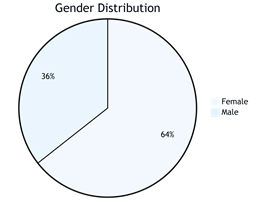
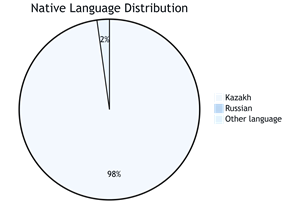
Figure 1. Gender Distribution Figure 2. Native Language Distribution
Most participants (91.1%) were in 9th grade. Nearly half (48.9%) had studied English for ≤1 year, 20% for 1-3 years, and 31.1% for >3 years.
Table 1.
Grade Level and Years of Studying English
|
Characteristic |
Category |
N |
Percent |
|
Grade Level |
8 grade |
4 |
8,9 % |
|
|
9 grade |
41 |
91,1 % |
|
Years Studying English |
up to 1 year |
22 |
48,9 % |
|
|
1-3 years old |
9 |
20 % |
|
|
more than 3 years |
14 |
31,1 % |
These results provide a clear overview of the sample demographics and English learning experience. Tables and diagrams (e.g., bar charts for gender distribution or years of study) can be included to visually highlight these trends. Primary motivations for learning English were: future employment (37.8%), understanding media without translation (35.6%), travel communication (17.8%), and academic grades (8.9%). When metaphorically describing English ability, 46.7% chose “a superpower for global connection,” 26.7% “a key to information,” 15.6% “a new way of thinking,” and 11.1% “a mandatory school subject.”Participants reported their primary motivations for learning English, as shown in Table 2.
Table 2.
Primary Motivations and Perception of English Ability (N=45)
|
Motivation |
% |
|
Getting a better job in the future |
37.8% |
|
Understanding English movies and music without translation |
35.6% |
|
Being able to communicate when traveling abroad |
17.8% |
|
Getting good grades in school |
8.9% |
|
Perception |
% |
|
A superpower that lets me connect with the world |
46.7% |
|
A useful key for the internet and information |
26.7% |
|
A new way of thinking |
15.6% |
|
A school subject I have to study |
11.1% |
Table 3
Vocabulary Learning Strategies (N=45)
|
Strategy |
% |
|
Create pictures and associations in my mind |
37.8% |
|
Use them immediately in conversation |
37.8% |
|
Relate them to similar words in Kazakh/Russian |
17.8% |
|
Write them down and practice multiple times |
6.7% |
A series of questions explored the relationship between language and identity.
A plurality (48.9%) felt both their native language and English were “equally close.” Code-switching was predominantly viewed positively: 46.7% felt “creative and flexible,” and 28.9% felt “belonging to multiple worlds.” When thinking in English, 37.8% reported thoughts as “more direct and faster,” while 31.1% felt “no difference” from thinking in their native language.
Table 4.
The Internalization of a Bilingual Identity (N=45)
|
Choice |
% |
|
Both languages feel equally close to me |
48.9% |
|
My native language |
28.9% |
|
English |
22.2% |
|
I've never thought about this |
8.9% |
|
Feeling |
% |
|
Creative and flexible |
46.7% |
|
Like I belong to multiple worlds |
28.9% |
|
It happens automatically without special feeling |
15.6% |
|
Confused and lost |
8.9% |
|
Description |
% |
|
More direct and faster |
37.8% |
|
No different from thinking in my native language |
31.1% |
|
Like I'm playing a role |
17.8% |
|
Unnatural and forced |
13.3% |
The perceived challenges of being oneself in English were also explored. The greatest challenge, reported by 46.7% of participants, was "Not finding the right words for my feelings" (Table 4). Other challenges included "Not being able to joke naturally" (24.4%), "Feeling like I have a simpler personality" (17.8%), while 11.1% reported "I don't feel this difference." Finally, regarding the impact on social relationships, participants were nearly evenly split on whether learning English helped them understand their Kazakh/Russian-speaking friends better: 31.1% cited the ability to "notice differences in how we express emotions," and another 31.1% reported they could "help translate and explain things to them" (Table 4). Meanwhile, 20.0% stated "It hasn't really affected my relationships," and 17.8% selected "I understand cultural references in both languages."
Table 5.
Psychosocial Dimensions of English Proficiency (N=45)
|
Feeling |
% |
|
A sense of achievement |
40.0% |
|
More confident in myself |
33.3% |
|
Like a part of my identity |
15.6% |
|
Relieved that it's over |
11.1% |
|
Challenge |
% |
|
Not finding the right words for my feelings |
46.7% |
|
Not being able to joke naturally |
24.4% |
|
Feeling like I have a simpler personality |
17.8% |
|
I don't feel this difference |
11.1% |
|
Impact |
% |
|
I can notice differences in how we express emotions |
31.1% |
|
I can help translate and explain things to them |
31.1% |
|
It hasn't really affected my relationships |
20.0% |
|
I understand cultural references in both languages |
17.8% |
The findings from this study present a multifaceted picture of the language learning experience among multilingual students. The data indicate that a significant proportion of participants perceive English not merely as an academic subject, but as a vital tool for global connection and future opportunity, with a strong motivation being career advancement. This is coupled with a complex linguistic identity, where a large number of respondents feel equally connected to both their native language and English, and view code switching as a creative and flexible skill.
DISCUSSION
The results confirm that second language learning is a mediated and transformative experience (Lantolf, 2000; Tang, 2016), characterized by a fundamental duality: empowerment alongside enduring challenges. Participants’ view of English as a “superpower” for connection aligns with its role as a tool for mediated participation in global networks. Strong instrumental motivations (career, media access) reflect a drive for unmediated cultural engagement. Feelings of achievement and confidence after using English support Tang’s (2016) assertion that fluency development is personally empowering and contributes to a global citizen identity. The development of a multicompetent linguistic identity is evident, with many students feeling equally connected to both languages and viewing code-switching as a flexible skill. However, the predominant challenge difficulty in affective self-expression highlights a critical gap. This aligns with research on affective barriers in language learning (Maitlo et al., 2022), suggesting that the most significant hurdle may not be linguistic accuracy but the capacity for authentic emotional conveyance in the L2. This emotional dimension completes the picture of transformation, which involves not only gains but also negotiation of loss and limitation. Limitations include a small, single-sample size (N=45), use of a non-validated instrument, and a cross-sectional design limiting causal inferences. Future research should validate the survey with larger, diverse populations, employ longitudinal designs to track identity evolution, and use qualitative methods to explore the lived experience of emotional expression in an L2. Pedagogical interventions focusing on emotional literacy and identity negotiation in the language classroom are recommended.
CONCLUSION
This study demonstrates that for secondary school students in Kazakhstan, learning English is a profoundly transformative journey that catalyzes personal growth, reshapes aspirations, and fosters a sense of global citizenship. It facilitates the development of a complex, multicompetent linguistic identity. However, this empowering process is accompanied by a significant personal challenge: the struggle to express one’s authentic self emotionally in the new language. The findings underscore that second language acquisition is far more than an academic pursuit; it is a deeply human experience that continuously shapes and reconstructs the learner’s identity and worldview.
